日语听力练习 · C1 · 语速再快也跟得上
What does “おばあ孝行” mean in Japanese?
ジュン選手とおばあちゃんの沖縄家庭料理タイム
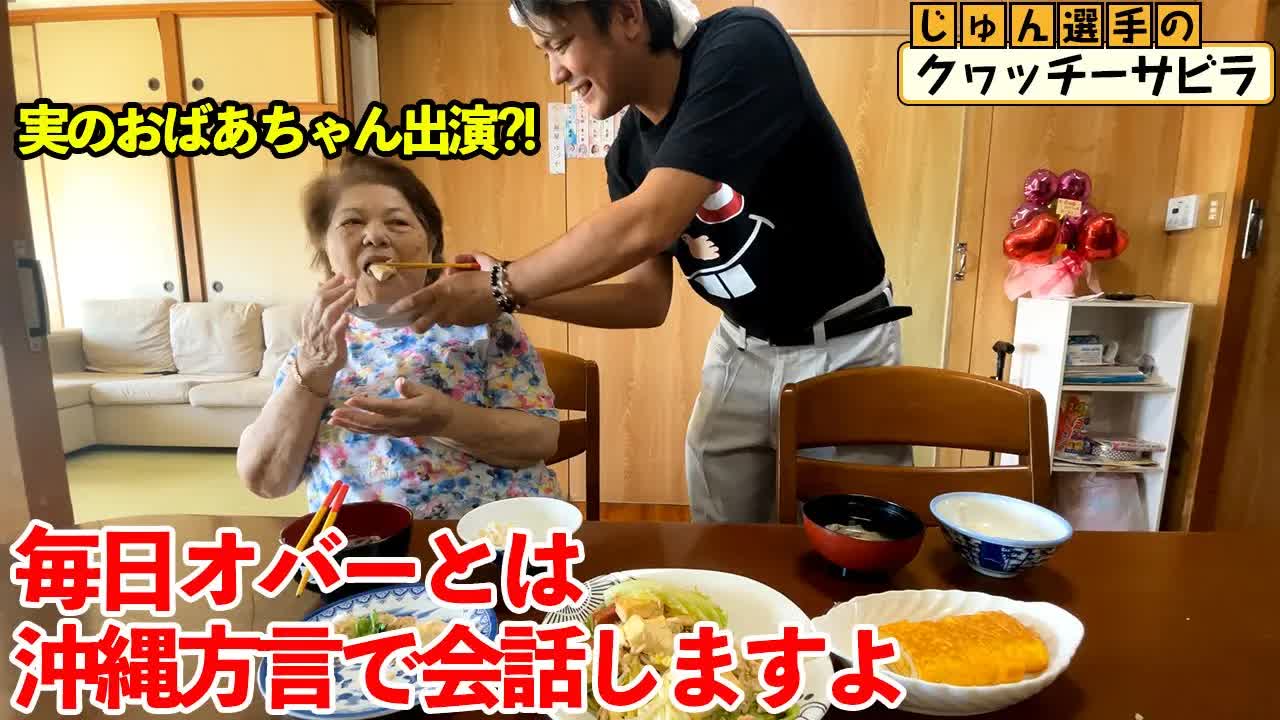


来自 YouTube 上的 おきなわちゃんねるsupported by沖楽。 看原视频
おばあ孝行 swaps the parent in 親孝行 for grandma: being good to your grandmother.
親孝行 (oyakōkō) means being dutiful and good to your parents, and 親不孝 is its opposite. Japanese speakers happily swap the first part to fit the person: here おばあ孝行 means doing something kind for your grandmother. The word 孝行 stays the same, so once you know 親孝行 you can build new ones on the spot. It is a small pattern with a warm tone.
親孝行 works as a noun, a な-adjective (親孝行な息子) and with する (親孝行する). The 孝 in it is the idea of filial piety. Swapping 親 for おばあ is casual and affectionate, not a fixed dictionary word. In the clip, a player says he will cook for his grandmother: 「今日はよ、おばあちゃん孝行しようかなと思ってよ」, and a friend repeats it as 「おばあ孝行」. The rest of the clip, with Okinawan-flavoured speech and shoulder-rubbing, shows the idea in action.