Esperanto-Hörübungen · A1 · Anfänger
What does the suffix “-ejo” mean in Esperanto?
Rita finas lecionon ĉe sketejo



Von Shanny Love Esperanto 💚 auf YouTube. Original ansehen
Add -ejo to a root and you get the place where that thing happens: lerni, lernejo.
The suffix -ejo turns a root into “a place designed for that purpose”: labori (to work) gives laborejo (workplace), preĝi (to pray) gives preĝejo (place of worship), lerni gives lernejo (school). It is one of the most productive tools in Esperanto, because you can name a place without learning a new word. Learn the pattern once and you can read dozens of new nouns.
The clip’s title and the line “nun mi estas ĉe la sketejo” put the pattern to work: a place named after the activity that happens there, here a skating lesson. The same logic gives dormejo (dorm) and advokatejo (law office). Spot -ejo at the end of an unfamiliar word and ask what people do there. Don’t confuse it with -ujo (container or country, as in Esperantujo) or -ario (collection).
Wie häufig sind die Wörter in diesem Clip?
90,5%
der Wörter gehören zu den 2.000 häufigsten Esperanto-Wörtern
Aus unserer ForschungWie viele Wörter brauchst du, um Videos von Muttersprachlern zu verstehen?
Mehr Clips wie dieser
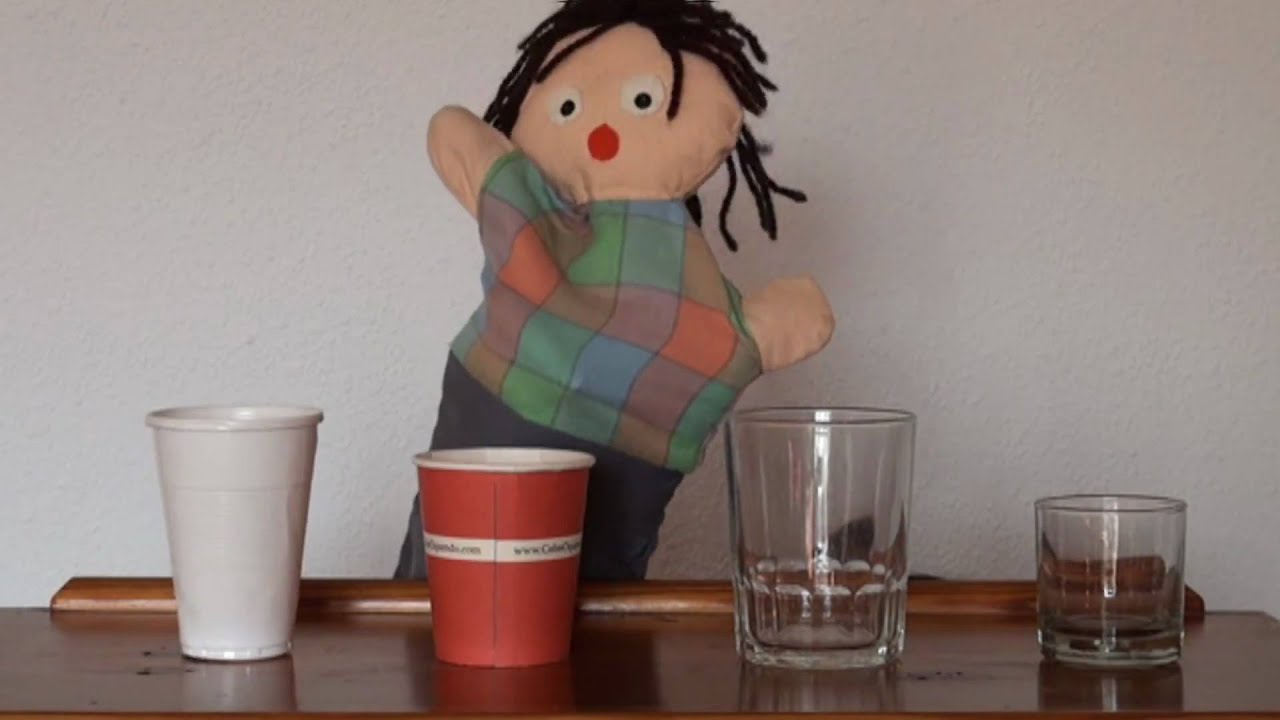
Lilo parolas pri diversaj glasoj

Ĉu vi ŝatus utiligi Pasportan Servon?

Kia estas la Kristnasko en Pekino
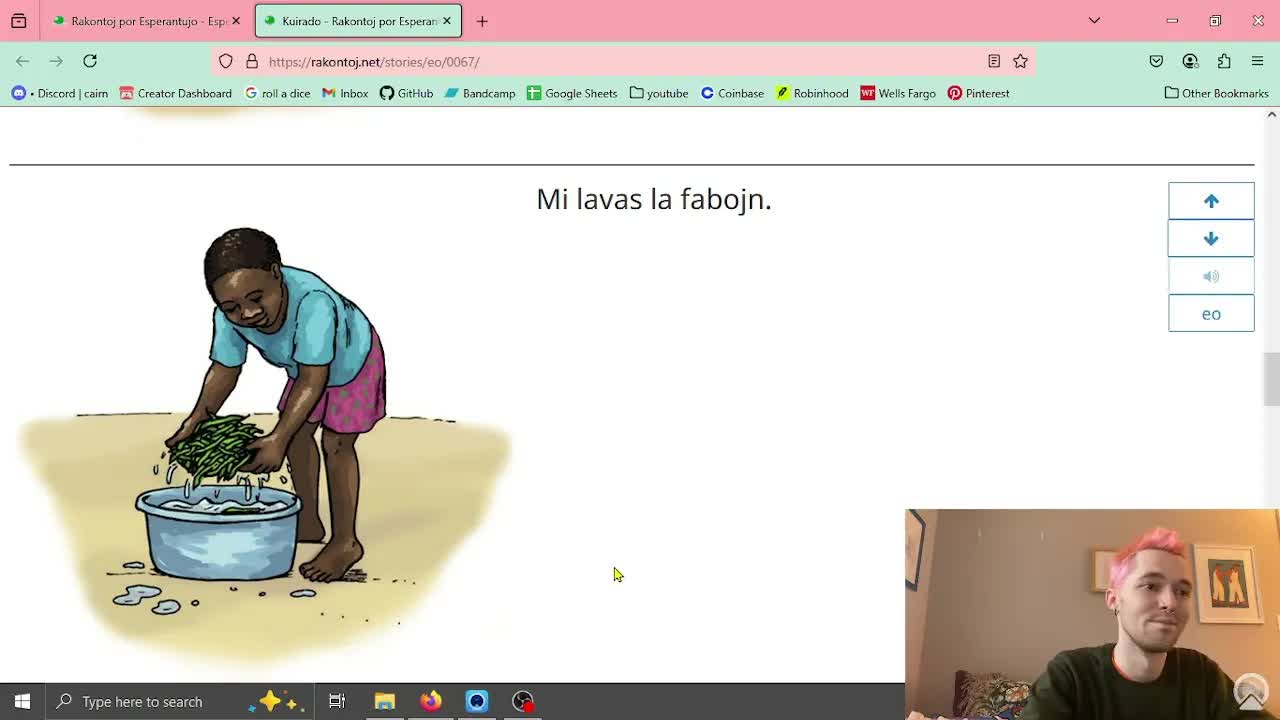
Kuirado: Preparo de Legomoj
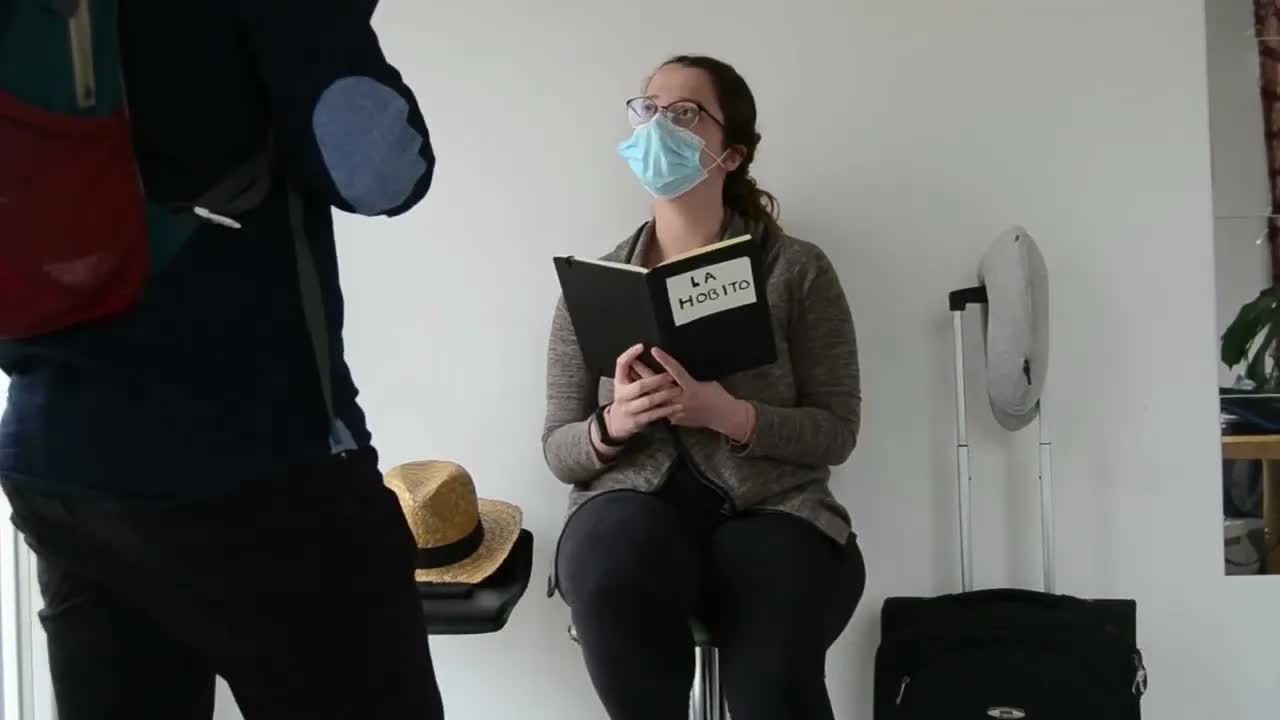
Helpo en la Flughaveno: Maltrafita Vojaĝanto
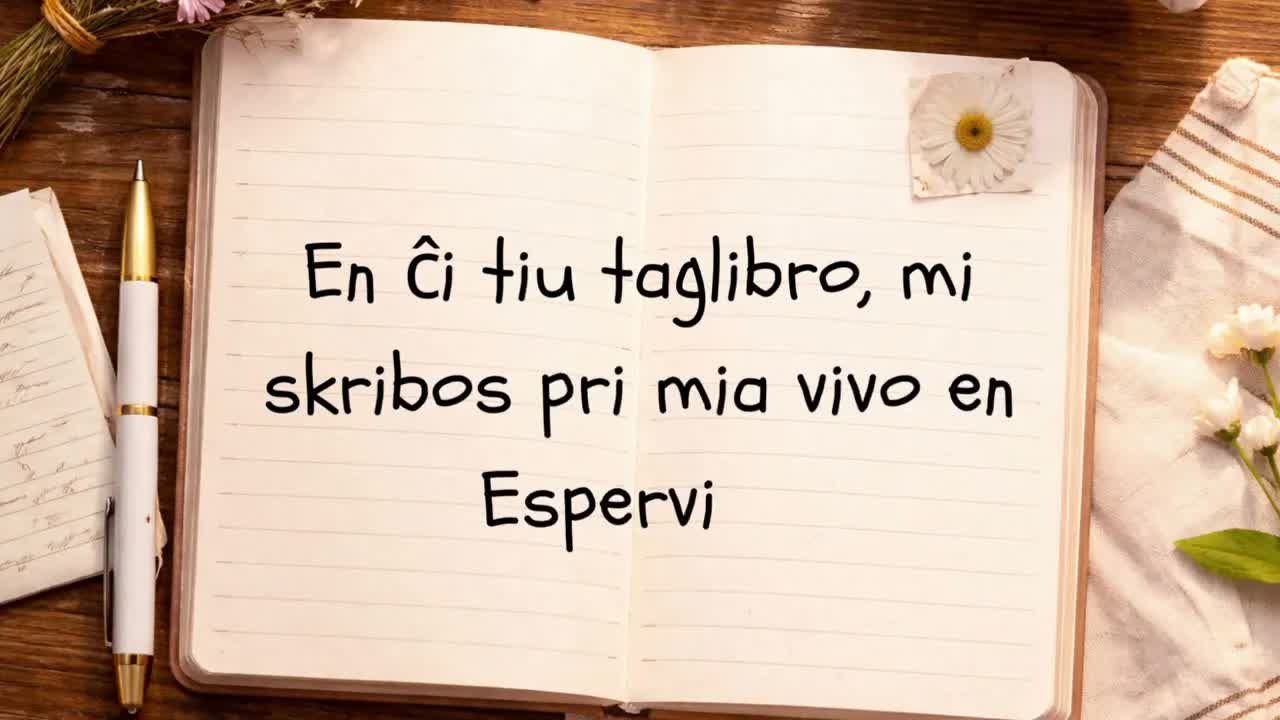
Taglibro de Luma, Epizodo Unu
Lerne mit echten Videos
Tausende Clips wie dieser, passend zu deinem Niveau, während du schaust.