Luisteroefening in het Esperanto · C1 · Moeiteloos begrip
What does “flagri” mean in Esperanto?
Vivresumo - Mikaelo Bronŝtejn
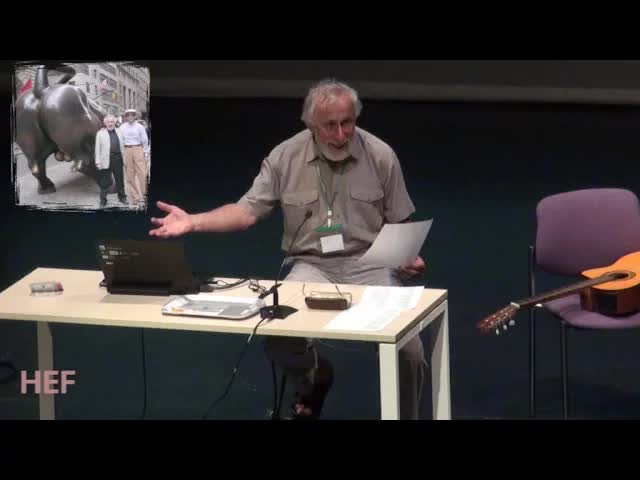


Van Federación Española de Esperanto op YouTube. Bekijk origineel
Flagri means to flicker or flare, so a beard that 'flagras' in the wind moves like a flame.
The verb flagri looks like it should be about flags, but it comes from Latin flagrare and means to flicker or flare up, the way a flame does. It is a literary word you will meet in poetry and songs rather than in daily chat. Because it carries the image of fire, using it for something that waves in the wind makes that thing look alight.
In the clip the poet looks back on his life and says 'flagras la barbo en vento kvazaŭ grizaj flam flokoj', his beard flickers in the wind like grey flakes of flame. The verb and the simile reinforce each other: the beard moves like fire. Related forms are flagrado (a flickering), flagro (a flare or flash) and flagreti (to flicker lightly). Zamenhof’s early dictionary already lists the word, so it is old Esperanto, not a recent coinage.
Meer clips zoals deze
Historio de Antonija Jozičić kaj Esperanto
La plej malfacile komprenebla libro en Esperanto
La eskapo: Sekreta rulaĵo kaj la nevidebla Dio
Tomaso pri la paŭzo de Evildea kaj Patreon-ĉefaj novaĵoj
Imagina epilogo de la opero Aida
Julie Spickler pri sia sperto en Esperantujo
Leer van echte video’s
Duizenden clips zoals deze, afgestemd op jouw niveau terwijl je kijkt.