Ćwiczenia ze słuchania undefined · B1 · Pewnie na co dzień
What does “snaha” mean in Bosnian?
Ljubav i mržnja između snaje i svekrve
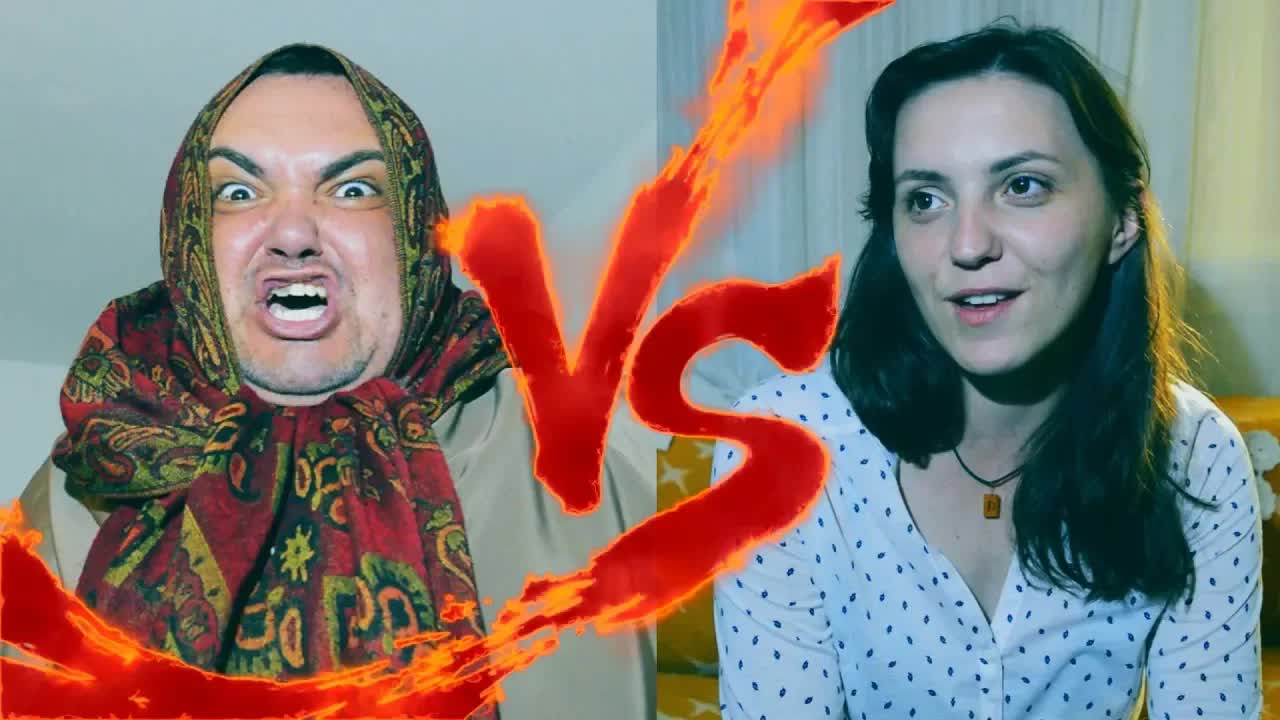


Od Omcoo na YouTube. Obejrzyj oryginał
Snaha means daughter-in-law, but also a brother’s wife.
Snaha is the Bosnian word for a daughter-in-law, the wife of one’s son. It also covers the wife of one’s brother, so one word does two family jobs. It is inherited from Proto-Slavic and has variant forms snaja and snaša. Its partners are svekrva (the husband’s mother) and svekar (the husband’s father), and the clip’s whole fight is between exactly these two roles.
The mother-in-law opens with “Pa gdje si ti snaho moja?” (“So where are you, my daughter-in-law?”). Snaho is the vocative, the form you use when addressing her directly. Without a vocative, the word is snaha, as in “moja snaha” (my daughter-in-law). The title uses the variant snaja: “snaje i svekrve” (of the daughter-in-law and the mother-in-law). The wife’s parents have different words, punica and punac, so Bosnian tells you whose side of the family someone is on.
Więcej takich klipów
Balkanac ide autom na Mars za trideset eura
Mladi muzičari otkrivaju Kotor svojim svirkama
Omer opljačka deda i susjede
Razgovor o hobiju izrade drvenih simbola
Bosanski Tarzan u šumi
Selo Baljvine gdje su Bošnjaci i Srbi živjeli u miru
Ucz się z prawdziwych filmów
Tysiące klipów takich jak ten, dopasowanych do twojego poziomu w trakcie oglądania.