Hindi listening practice · A2 · Strong beginner
What does “chuhedani” mean in Hindi?
Selfish Mice and Goat Story Moral Lesson
In this clip you’ll learn 10 words, including अब तो मैं गया (I'm doomed now), डर गया (became afraid), and थोड़ी देर बाद (after a little while).
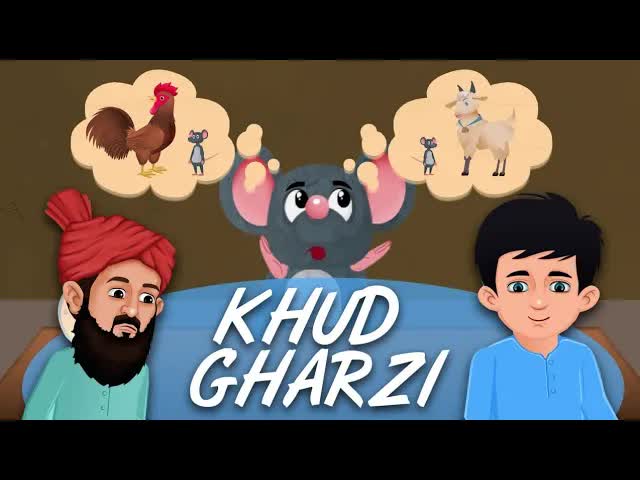


From Kids Madani Channel on YouTube. Watch original
“mousetrap”; literally a “mouse-holder,” from चूहा (mouse) + -दानी (container)
चूहेदानी is a mousetrap, and it is built like a sentence: चूहा (mouse) plus -दानी, a Persian suffix meaning “a holder or container for.” So a mousetrap is literally a mouse-holder. Learn that ending once and a whole shelf of household words opens up, from teapots to mosquito nets.
The same ending sits in चायदानी (teapot, a tea-holder), मच्छरदानी (mosquito net, a mosquito-holder that keeps them out), and words with the shorter form -दान: कूड़ेदान (rubbish bin), पीकदान (spittoon), क़लमदान (pen case). Platts lists dān as “an affix denoting the receptacle, place, or stand” for a thing. Notice also that चूहा changes to चूहे before the suffix, the same oblique form Hindi uses before postpositions. In this moral tale a mouse warns the rooster and the goat that a चूहेदानी has come into the house. They shrug it off, a snake gets caught in it instead, and both selfish friends pay the price.
Words you’ll learn in this clip
Each word with what it means in this clip and the line it is said in.
- ▶ 0:20Phraseअब तो मैं गयाI'm doomed now
“थोड़ी देर बाद चूहे ने देखा थैली के अंदर चूहेदानी है। चूहा डर गया। कहा, "अब तो मैं गया।"”
Checked by Tarun, a native speaker - ▶ 0:20Phraseडर गयाbecame afraid
“थोड़ी देर बाद चूहे ने देखा थैली के अंदर चूहेदानी है। चूहा डर गया। कहा, "अब तो मैं गया।"”
Checked by Tarun, a native speaker - ▶ 0:20Phraseथोड़ी देर बादafter a little while
“थोड़ी देर बाद चूहे ने देखा थैली के अंदर चूहेदानी है। चूहा डर गया। कहा, "अब तो मैं गया।"”
Checked by Tarun, a native speaker - ▶ 0:20A rarer word, outside the 5,000 most commonथैलीbag
“थोड़ी देर बाद चूहे ने देखा थैली के अंदर चूहेदानी है। चूहा डर गया। कहा, "अब तो मैं गया।"”
Checked by Tarun, a native speaker - ▶ 0:20A rarer word, outside the 5,000 most commonचूहेदानीmousetrap
“थोड़ी देर बाद चूहे ने देखा थैली के अंदर चूहेदानी है। चूहा डर गया। कहा, "अब तो मैं गया।"”
Checked by Tarun, a native speaker - ▶ 0:29Phraseआ गई हैhas arrived
“चूहा अपने दोस्तों को बताने निकल पड़ा। "सुनो, सुनो, घर में चूहेदानी आ गई है।" मुर्गे ने सुना तो कहा, "चूहेदानी से तो खतरा आपको है। मैं कैसे उसमें फंस सकता हूँ?"”
Checked by Tarun, a native speaker - ▶ 0:29Phraseफंस सकता हूँcan get trapped
“चूहा अपने दोस्तों को बताने निकल पड़ा। "सुनो, सुनो, घर में चूहेदानी आ गई है।" मुर्गे ने सुना तो कहा, "चूहेदानी से तो खतरा आपको है। मैं कैसे उसमें फंस सकता हूँ?"”
Checked by Tarun, a native speaker - ▶ 0:29One of the 1,000 most common wordsखतराdanger
“चूहा अपने दोस्तों को बताने निकल पड़ा। "सुनो, सुनो, घर में चूहेदानी आ गई है।" मुर्गे ने सुना तो कहा, "चूहेदानी से तो खतरा आपको है। मैं कैसे उसमें फंस सकता हूँ?"”
Checked by Tarun, a native speakerLooked up by Mayu - ▶ 0:29Phraseनिकल पड़ाset off
“चूहा अपने दोस्तों को बताने निकल पड़ा। "सुनो, सुनो, घर में चूहेदानी आ गई है।" मुर्गे ने सुना तो कहा, "चूहेदानी से तो खतरा आपको है। मैं कैसे उसमें फंस सकता हूँ?"”
Checked by Tarun, a native speaker - ▶ 0:29One of the 5,000 most common wordsमुर्गेrooster
“चूहा अपने दोस्तों को बताने निकल पड़ा। "सुनो, सुनो, घर में चूहेदानी आ गई है।" मुर्गे ने सुना तो कहा, "चूहेदानी से तो खतरा आपको है। मैं कैसे उसमें फंस सकता हूँ?"”
Checked by Tarun, a native speaker
How common are the words in this clip?
86%
of words are in the top 2,000 most common Hindi words
From our researchHow many words do you need to understand native videos?
More clips like this
चलें? जल्दी खाओ!

दया की रोती विदाई और पति की दिलासा
भारी खाने के बाद की नौकरी

दादाजी की भूतिया गिनती वाली मजेदार कहानी
फिल्म गदर की नकल से मैं अमीर कैसे बना
