Practice listening in Greek · B1 · Talks about daily life
What does «σπαστικός» mean in Greek slang?
Τα παράπονα των εργαζομένων για τον Franη
In this clip you’ll learn 10 words, including Γωγώ (name), Φράνκι (Frankie), and Έχουμε γίνει (we have become).
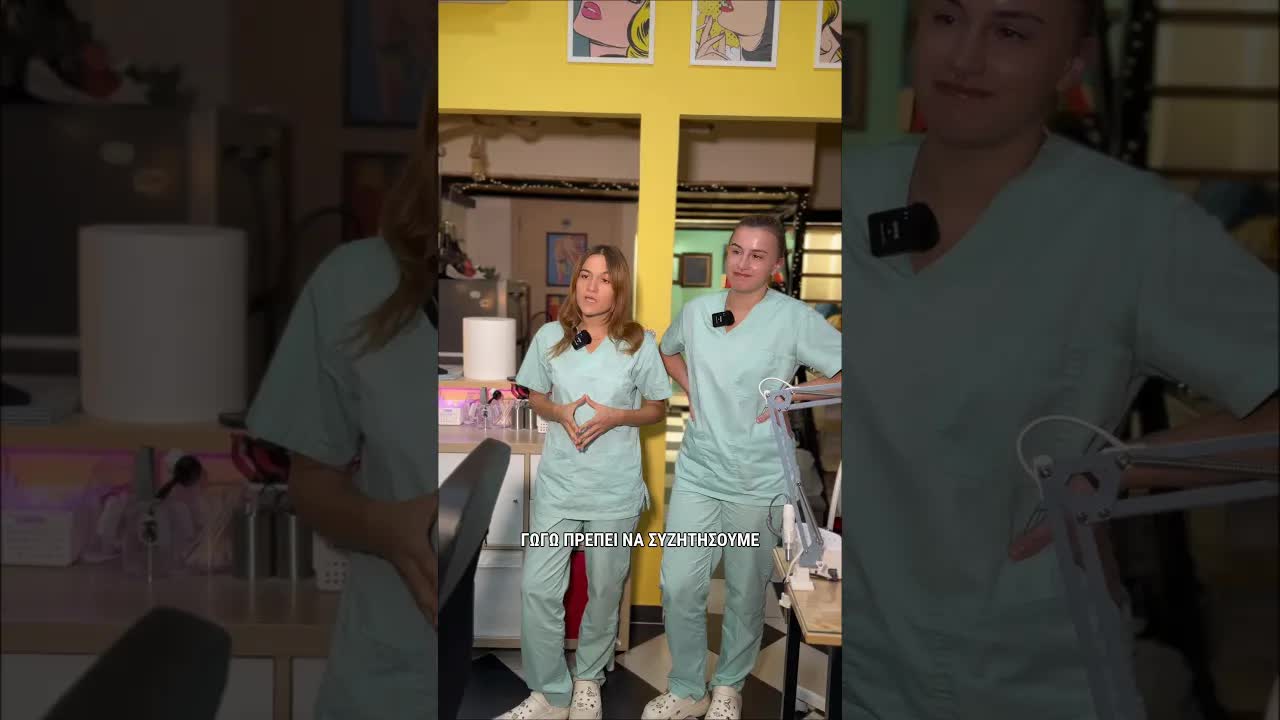


From Franky’s Nails on YouTube. Watch original
σπαστικός: colloquially, someone whose habits get on your nerves.
In everyday Greek, σπαστικός (neuter σπαστικό) is a colloquial way to call a person or behavior annoying. It comes from σπάω, “to break”, and a medical sense (spasms) is the older one. The figurative use is about someone whose obsessions or behavior irritate others, much like English “a pain” or “grating”. You hear it constantly in casual talk about coworkers and friends.
The Greek wiktionary lists three senses: the medical one (spastic paralysis), the one connected to muscle spasms, and the colloquial one, defined as someone who with their obsessions and behavior annoys or bothers others. It is used for both people and things, e.g. ένας σπαστικός τύπος. Use it only in informal talk, as it is blunt. In the clip, a salon worker lists her boss’s bad habits and adds one more: «και το άλλο, το οποίο επίσης πάρα πολύ σπαστικό, όταν εμείς δουλεύουμε μια χαρά με τις πελάτισσές μας ... πετάγεται και αυτός με τα κρύα αστεία του.» The complaint is a perfect use: a small habit that grates.
Words you’ll learn in this clip
Each word with what it means in this clip and the line it is said in.
- ▶ 0:00A rarer word, outside the 5,000 most commonΓωγώname
“Γωγώ πρέπει να συζητήσουμε κάτι πολύ σοβαρό.”
Looked up by Sydney - ▶ 0:06A rarer word, outside the 5,000 most commonΦράνκιFrankie
“Με τον Φράνκι.”
Looked up by Julia - ▶ 0:12PhraseΈχουμε γίνειwe have become
“Έχουμε γίνει δούλες του.”
Changed into or ended up as something; here, they have become his servants.
Looked up by Julia - ▶ 0:22A rarer word, outside the 5,000 most commonτζελgel
“Μια φορά είχε αφήσει και το τζελ ανοιχτό και απολημμυρίστηκε κιόλας.”
Looked up by Julia - ▶ 0:22A rarer word, outside the 5,000 most commonαπολημμυρίστηκεgot flooded
“Μια φορά είχε αφήσει και το τζελ ανοιχτό και απολημμυρίστηκε κιόλας.”
Looked up by Julia - ▶ 0:28Phraseόπου να 'ναιanywhere at all
“Πετάει τα γάντια του όπου να 'ναι.”
Looked up by Julia - ▶ 0:31A rarer word, outside the 5,000 most commonαπορροφητήραextractor hood
“Και τελευταίο, δεν καθαρίζει το απορροφητήρα μετά το ραντεβού.”
Looked up by Julia - ▶ 0:35PhraseΤι τελευταίοwhat last one
“Τι τελευταίο καλέ, έχει κι άλλα.”
Looked up by Julia - ▶ 0:37A rarer word, outside the 5,000 most commonψίχουλάcrumbs
“Όταν τρώει εμείς μαζεύουμε τα ψίχουλά του.”
Checked by Peristera, a native speakerLooked up by Julia - ▶ 0:40Phraseμια χαράperfectly fine
“Και το άλλο, το οποίο επίσης πάρα πολύ σπαστικό, όταν εμείς δουλεύουμε μια χαρά με τις πελάτισσές μας, έχουμε μια χαρά συζήτηση, πετάγεται και αυτός με τα κρύα αστεία του.”
Checked by Peristera, a native speakerLooked up by Julia


How common are the words in this clip?
94.3%
of words are in the top 2,000 most common Greek words
From our researchHow many words do you need to understand native videos?
More clips like this

Η μάνα μου και το σκυλί που δεν ήθελα να ενοχλήσω

Οι πιο δημοφιλείς αναζητήσεις στο Google το 2019

Η ιστορία μου όταν ήμουν άστεγος

Γιατί η Κίμωλος είναι το νησί της καρδιάς μου

Μικρό Δωράκι Για την Κοπέλα Μου

Διαφορές στην ανατροφή της τηλεοπτικής και της αληθινής κόρης
Learn from real videos
Thousands of clips like this one, matched to your level as you watch.