Esperanto listening practice · C1 · Advanced
What does the suffix “-ebla” mean in Esperanto?
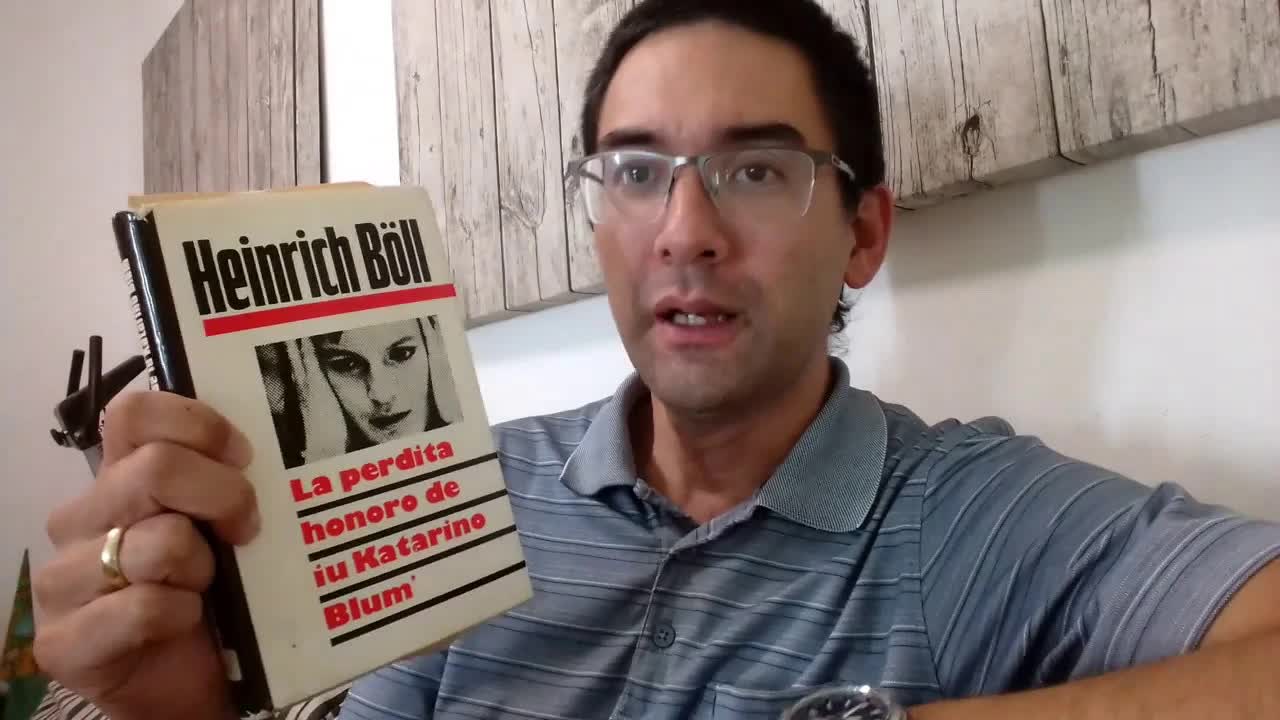
La plej malfacile komprenebla libro en Esperanto
In this clip you’ll learn one word: tiun ĉi (this one).


From Oliver rakontas on YouTube. Watch original
Swap a verb’s ending for -ebla and you get 'can be …-ed': kompreni becomes komprenebla, 'understandable'.
Esperanto has a suffix, -ebla, that means 'can be done'. Take a verb, drop its ending, add -ebla, and you get an adjective like English -able or -ible: kompreni (to understand) becomes komprenebla (understandable), vidi (to see) becomes videbla (visible). Learners can build words they have never met, and native speakers read them at once.
The speaker calls his book 'la plej malfacile komprenebla libro en Esperanto', the hardest-to-understand book he owns, and later says 'la tekstoj estas tre malfacile kompreneblaj'. Note the pattern: malfacile is an adverb ('with difficulty') describing the -ebla adjective, so the phrase literally means 'understandable only with difficulty'. The plural -j agrees with tekstoj. The suffix was borrowed from Latin -abilis and -ibilis, with the vowel shifted to e. Once you spot it, many long words open up.
Words you’ll learn in this clip
Each word with what it means in this clip and the line it is said in.
- ▶ 0:00Phrasetiun ĉithis one
“Hodiaŭ mi volas montri al vi tiun ĉi libron.”
More clips like this
Vivresumo - Mikaelo Bronŝtejn
Tomaso pri la paŭzo de Evildea kaj Patreon-ĉefaj novaĵoj
Historio de Antonija Jozičić kaj Esperanto
Julie Spickler pri sia sperto en Esperantujo
La eskapo: Sekreta rulaĵo kaj la nevidebla Dio
Mia unua IJK: Tago 1 en Eŭropo
Learn from real videos
Thousands of clips like this one, matched to your level as you watch.