Practice listening in Vietnamese · A1 · Beginner
What does “quá đáng” mean in Vietnamese?
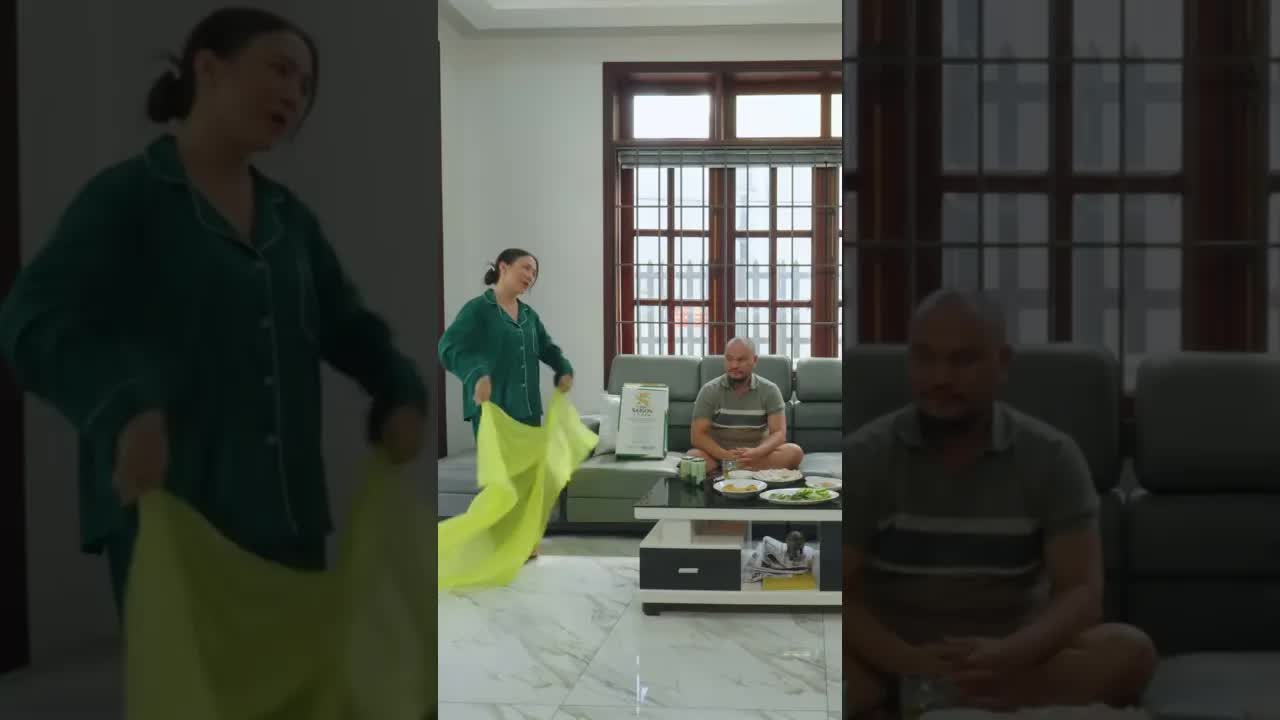
Quá Đáng Lắm Luôn - Hài Kịch FAPTV
In this clip you’ll learn 5 words, including coi (watch), tui (me), and Múa (dance).


From FAPTV Shorts on YouTube. Watch original
Quá đáng = “going too far”: what you say when someone crosses the line.
Quá đáng is what Vietnamese speakers say when someone goes too far: excessive, unreasonable, out of line. It is a Sino-Vietnamese word from 過當, and Wiktionary glosses it as “unconscionable”. Add “lắm rồi” and you get a firm “this is too much already”, the exact line the angry character repeats in this comedy clip.
In the clip a man is ordered to “múa cung đình cho tui coi” (dance a court dance for me), and he snaps: “Ông đừng có quá đáng. Quá đáng lắm rồi nha.” Notice the pattern: đừng có + verb/adjective is a blunt “don’t you dare be...”, and the final nha softens or sharpens the tone like a tag. The joke then stretches the word itself (“quà quà quà quá đáng”), a good reminder that quá and quà differ only in tone. Use it for everyday grievances too: “Anh quá đáng thật!” (You really are out of line!).
Words you’ll learn in this clip
Each word with what it means in this clip and the line it is said in.
- ▶ 0:00One of the 1,000 most common wordscoiwatch
“Múa cung đình cho tui coi.”
- ▶ 0:00One of the 5,000 most common wordstuime
“Múa cung đình cho tui coi.”
- ▶ 0:00One of the 5,000 most common wordsMúadance
“Múa cung đình cho tui coi.”
- ▶ 0:05Phrasequá đánggo too far
“Ông đừng có quá đáng.”
Used with “đáng” to say someone’s behavior is unreasonable or excessive.
Looked up by John - ▶ 0:05One of the 1,000 most common wordsđừngdon't
“Ông đừng có quá đáng.”
More clips like this

Học từ vựng chỉ đường khi đi xe máy ở Sài Gòn
Các hành động với chìa khóa xe máy
Thử thách ăn toàn món chiên trong một ngày

Mình rất thích ăn kẹo dẻo chua ngọt
Milo nằm yên để mẹ lau nhà

Tình Sử Bạch Tuộc Phần 2 - Trấn Thành & Hồng Vân
Learn from real videos
Thousands of clips like this one, matched to your level as you watch.