Práctica de escucha en Catalan · A2 · Bases sólidas
What does “quedar” mean in Catalan?
Planificar una trobada amb amics a Catalunya
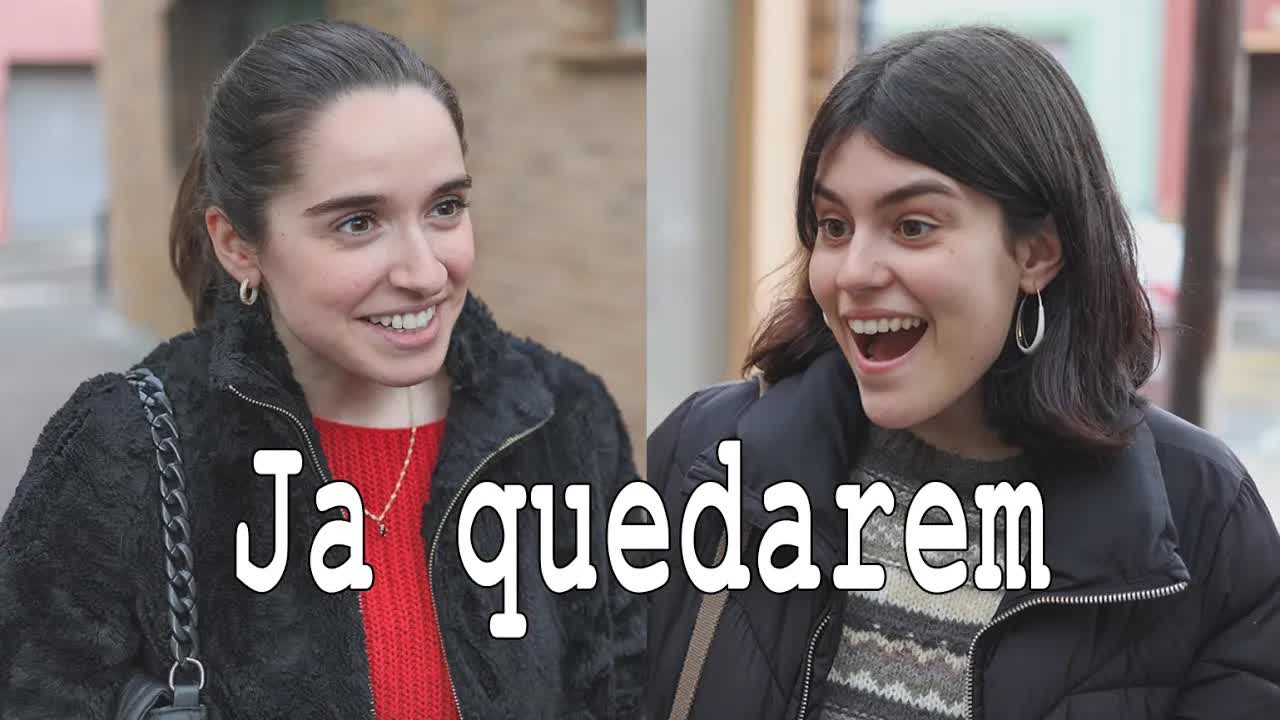


De Esquetxes comèdia en català en YouTube. Ver original
to arrange to meet someone, not “to stay”
In Catalan, quedar (without -se) means to arrange to meet: Quedem a les dues is “let’s meet at two”, and Hem quedat per dinar is “we’ve arranged to have lunch”. It does not mean “to stay”; that is quedar-se. Add the reflexive and the meaning changes, so Em quedo a casa is “I’m staying home”. The same verb covers almost every plan you make with friends.
In the clip, two friends bump into each other and try to find a slot. Every offer gets an excuse: “Avui he quedat” (I already have plans today), “Demà passat tinc metge”, “Estic de viatge”. The meeting-up sense is in the first excuse, and the scene ends with the vague “Ja quedarem” (we’ll sort something out) and “Quan vulguis només m’ho has de dir”. Useful related frame: “I si quedem per dinar?” (how about we meet for lunch?), where si plus present suggests a plan. Also note “tia” used as a friendly address in the opening “Ei tia!”, the Catalan counterpart of “mate” or “girl” among friends.
Más clips como este

El conte del pingüí mut per a nens
La Rínxols d'Or: Un conte clàssic per a nens
El Monstre de Colors: Explicació d'emocions per a nens
Com preparar el braç de gitano de patata
El conte del peix irisat de Marcus Pfister

Els Tres Porquets i el Llop: Un conte clàssic
Aprende con videos reales
Miles de clips como este, adaptados a tu nivel mientras ves.