Esperanto聽力練習 · B2 · 進階話題也能聊
What does “oni” mean in Esperanto?
Oni supozis: Mikronovelo pri malapero
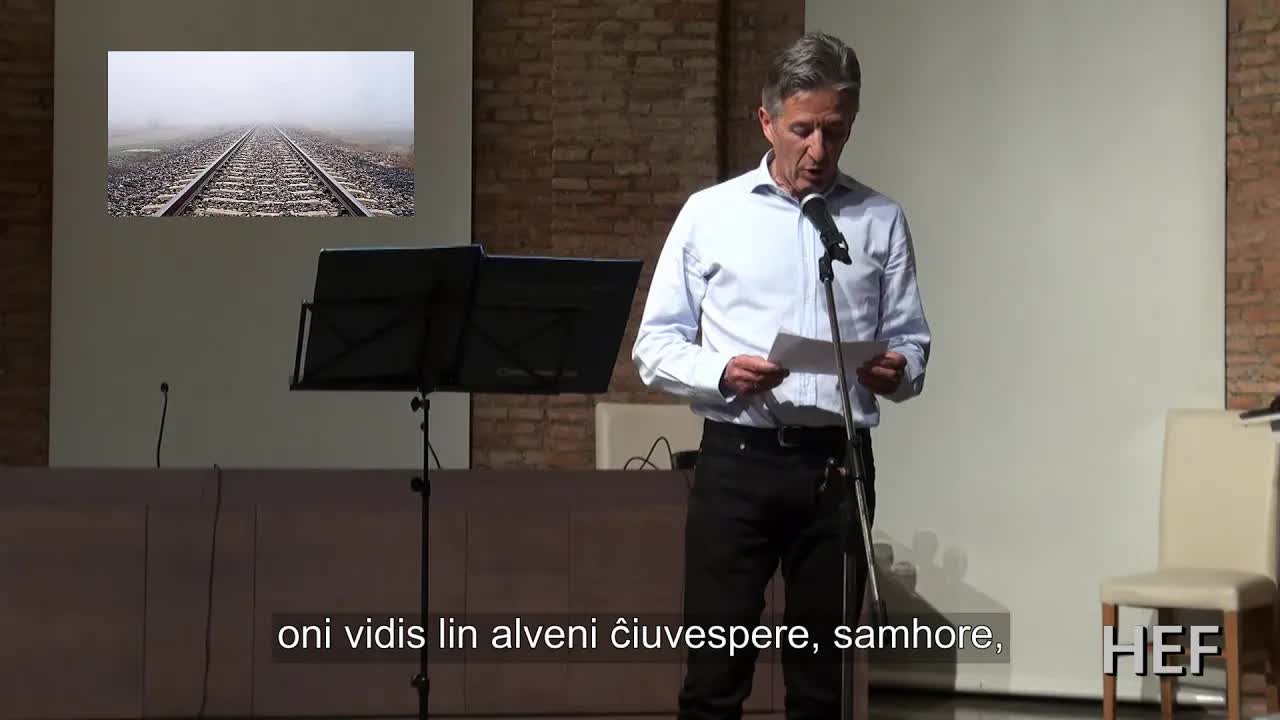


Federación Española de Esperanto,來自 YouTube。 看原始影片
Esperanto has a pronoun for 'people in general': oni, borrowed from French on.
Oni is Esperanto’s impersonal pronoun: it stands for nobody in particular, like English 'one', 'they' or 'people'. It always takes a verb in the third person singular, and English often turns the sentence into a passive: 'Oni supozis' is 'it was assumed' or 'people assumed'. It was borrowed from French on, which goes back to Latin homo, 'human being'.
The little story opens with 'Oni supozis, ke li amas trejnojn' (It was assumed that he loved trains), and the same oni returns in the last line, 'Oni simple ne plu vidis lin' (People simply no longer saw him). The repetition makes a whole neighbourhood sound like a single watching voice. Oni is used in everyday Esperanto for rules and general truths too: 'Oni ne tuŝu la bazon' means 'one shouldn’t touch the foundation'. Note that the possessive is not 'onia' when it refers back to the subject: you use sia.
更多類似的短片

Kion Mi Ŝanĝus Pri Esperanto: Tridektaga Defio #5
Ŝanĝoj en la ĉinaj du sesioj dum la pandemio

Oni Devus Civilizigi La Kapitalismon

Eta ĝisdatigo pri mia vivo kun bebo

Rakonto pri la gluotubo kaj vivo

Mi Kreis Patreon-Paĝon por Subteni Esperanton
從真實影片學語言
數千支像這樣的短片,依你的程度挑選。