Práctica de escucha en ucraniano · A2 · Bases sólidas
What does “олів'є” mean in Ukrainian?
Простий салат замість олів’є за кілька хвилин
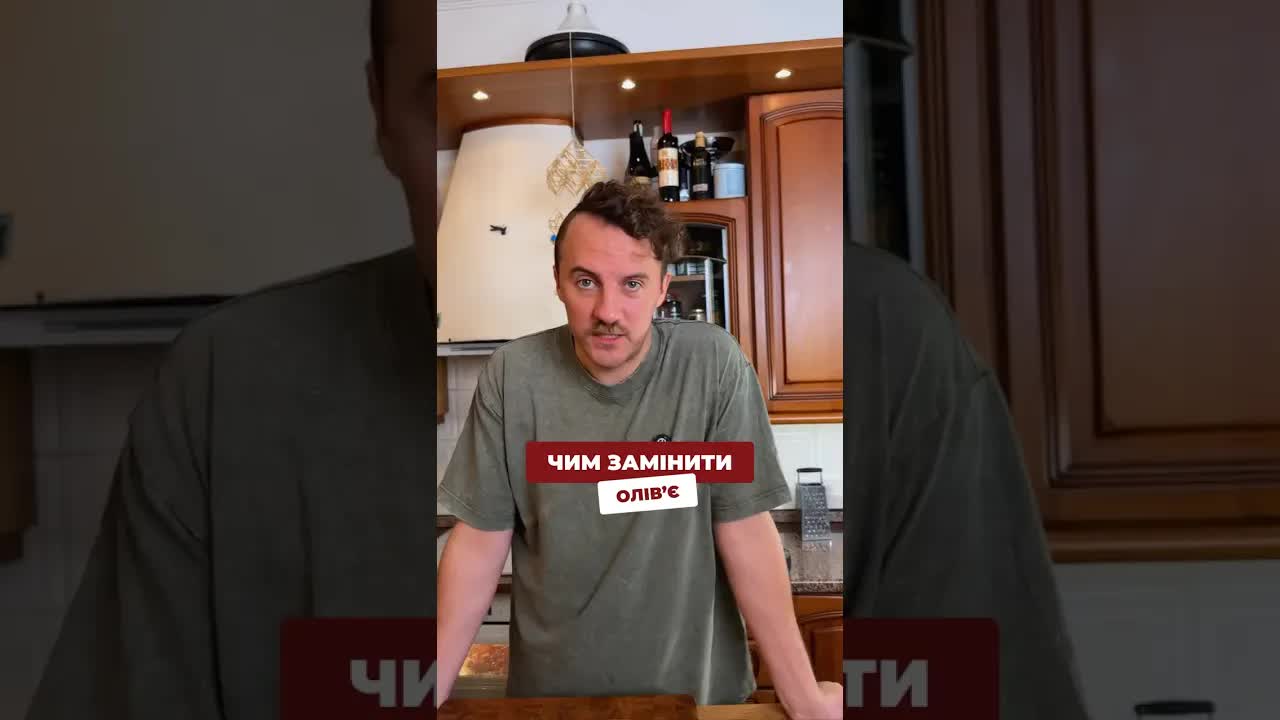


De Yevhen Klopotenko en YouTube. Ver original
Олів'є is the mayonnaise-and-boiled-vegetable salad that sits on every Ukrainian holiday table, and its name is a French surname.
Олів'є (olivie) is the classic mayonnaise salad of boiled potatoes, vegetables and sausage that many Ukrainians put on the table for New Year and other celebrations. The word looks French because it is: it comes from the surname Olivier, after Lucien Olivier, a chef of Belgian origin who made the salad in Russia in the 1860s. The noun never changes its ending.
The clip opens with a joke-correction: «Олів'є це не французька страва» (“Olivier is not a French dish”). The cook then offers a shortcut: boiled potato cut in half-rings instead of tiny cubes, plus sausage and mayonnaise. The word is indeclinable, so you say «салат олів'є», «замість олів'є», «до олів'є» with no change. Listen for «нарізати» and «відварена картопля» as well: they are the verbs and adjectives of any Ukrainian salad recipe.
¿Qué tan comunes son las palabras de este clip?
84,7%
de las palabras están entre las 2.000 más frecuentes en ucraniano
De nuestra investigación¿Cuántas palabras necesitas para entender videos de nativos?
Más clips como este

Чому кухар готує без рукавиць на кухні

Салат із сирої кукурудзи, томатів та авокадо

Квашена капуста з медом: простий рецепт

Розмова з бабусею про кнопки зливу

Класична паста карбонара без вершків вдома
Готуємо борщ: простий рецепт українською
Aprende con videos reales
Miles de clips como este, adaptados a tu nivel mientras ves.