Exercices d’écoute en tchèque · A1 · Débutant
What does “Štědrý večer” mean in Czech?
Zapalování adventních svíček s Tomíkem
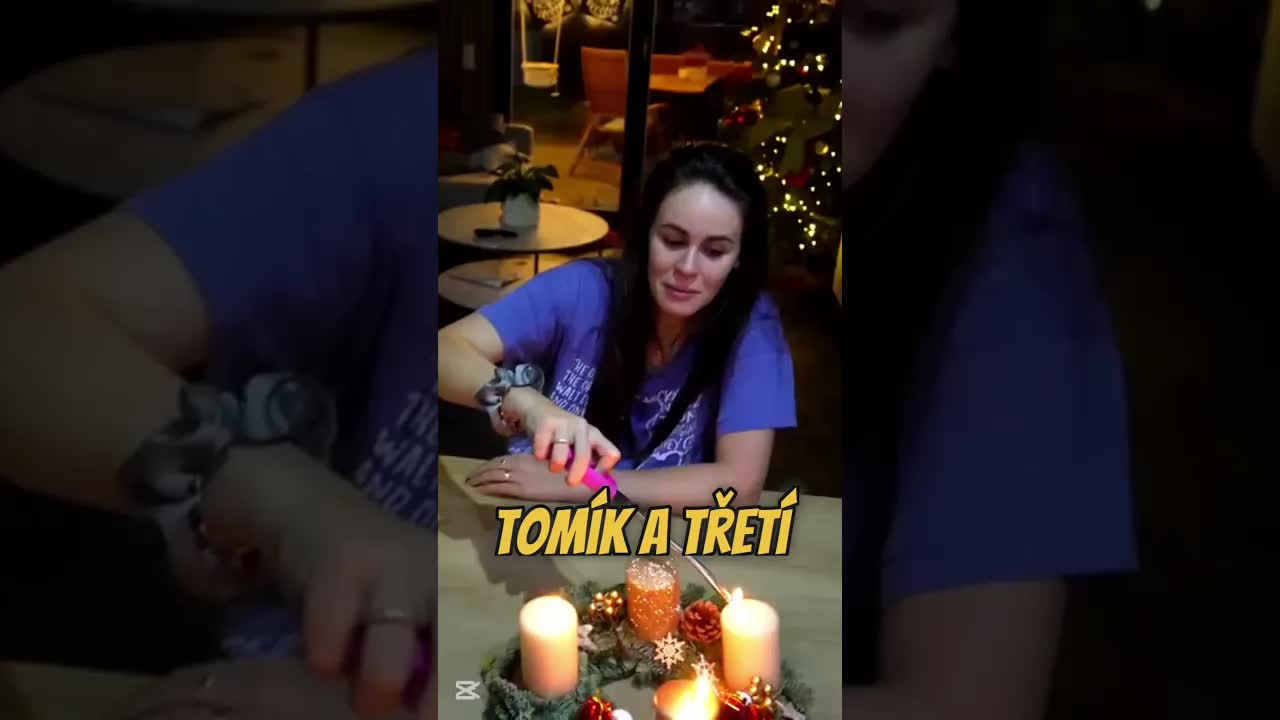


De Andrejkajulie sur YouTube. Voir l’original
Czech Christmas Eve is literally the “generous evening”: Štědrý večer.
In Czech, Christmas Eve is not “Vánoční večer” but Štědrý večer, and 24 December is Štědrý den. The adjective štědrý means “generous”, so the main Czech Christmas moment is literally the “generous evening” or “generous day”. Czechs celebrate on this evening, with the family dinner and gifts, rather than on 25 December. Learn the pair as a fixed name, not as a phrase you build yourself.
In the clip, someone asks about the advent candles: “Zapalujete všechny čtyři svíčky i na Štědrý večer?” (“Do you light all four candles on Christmas Eve too?”). Advent runs up to Štědrý den, which is why the question fits. Note the case: after “na” the phrase stays in the accusative, and since štědrý is an adjective, it agrees with the noun (Štědrý večer, Štědrý den, na Štědrý den). Štědrý is capitalised in both names. Traditional Štědrý večer food is fish soup and carp.
Les mots de ce clip sont-ils courants ?
87,7%
des mots font partie des 2 000 mots tchèques les plus courants
Notre rechercheCombien de mots faut-il pour comprendre des vidéos natives ?
Plus de clips comme celui-ci
Apprends avec de vraies vidéos
Des milliers de clips comme celui-ci, adaptés à ton niveau pendant que tu regardes.