土耳其文聽力練習 · B1 · 日常對話沒問題
What is the -miş past tense in Turkish and when do you use it?
Mışlı Muşlu Zamanın Komik Kullanımı
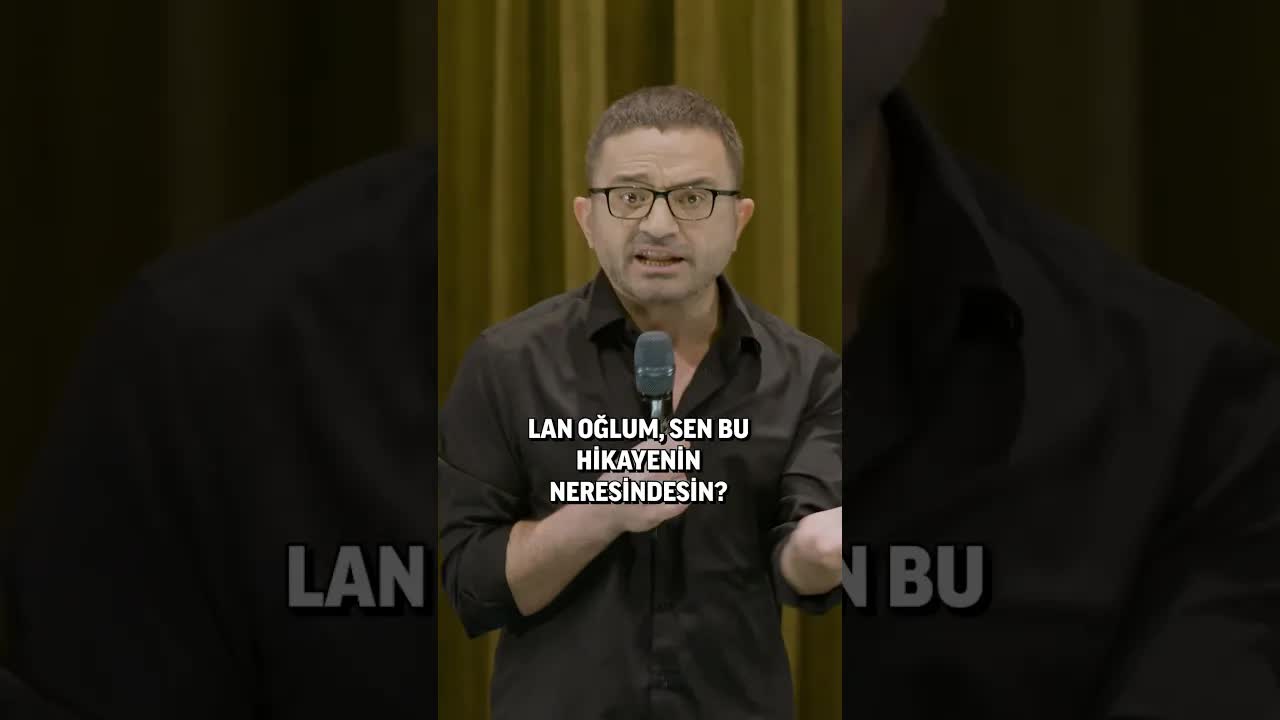


Ali Congun,來自 YouTube。 看原始影片
The Turkish -miş past is the “I heard it / apparently” tense, and stacking it makes a story sound second-hand.
Turkish has a past tense ending in -miş/-mış/-muş/-müş that says you did not see the event yourself: you heard it, inferred it, or are telling a story. Grammar books call it the “duyulan” or “-miş'li” past. It is how Turks tell fairy tales and gossip, and how they hedge. Pile it up in a first-person account and the speaker suddenly sounds like they’re reporting someone else’s life.
The clip makes a joke of exactly this. The speaker imitates a man saying “Ben adama o kadar söz vermişim, ben mal getirmişim, ben adama demişim, ben ne yapmışım.” Every verb carries -miş, so it sounds as if he is describing events he did not witness. The punchline: “Asıl özne sen misin?” (are you really the subject of this story?). So -miş is not only “past”: it marks “apparently” (“gelmiş” = he has apparently come).
這支短片的單字有多常見?
97.2%
的字詞落在土耳其文最常用的 2,000 個單字內
來自我們的研究看懂母語者的影片,需要多少單字?
更多類似的短片

Büryan Yemeği ve Bitlis-Siirt Tartışması

Hayatın roman olsa adını ne koyardın
Erzurum'da 101 Yaşındaki Amca ile Sohbet
Erzurumlu Bakkal ile Yumurta Şakası

En Komik Erzurum Fıkraları ve Video Ları
Kalabalık Bir Aile Hayali ve Piknik Keyfi
從真實影片學語言
數千支像這樣的短片,依你的程度挑選。