תרגול האזנה ביוונית · A1 · מתחילים
What does “μωρέ” mean in Greek?
Βοηθάει να βρει τα κλειδιά για ψώνια
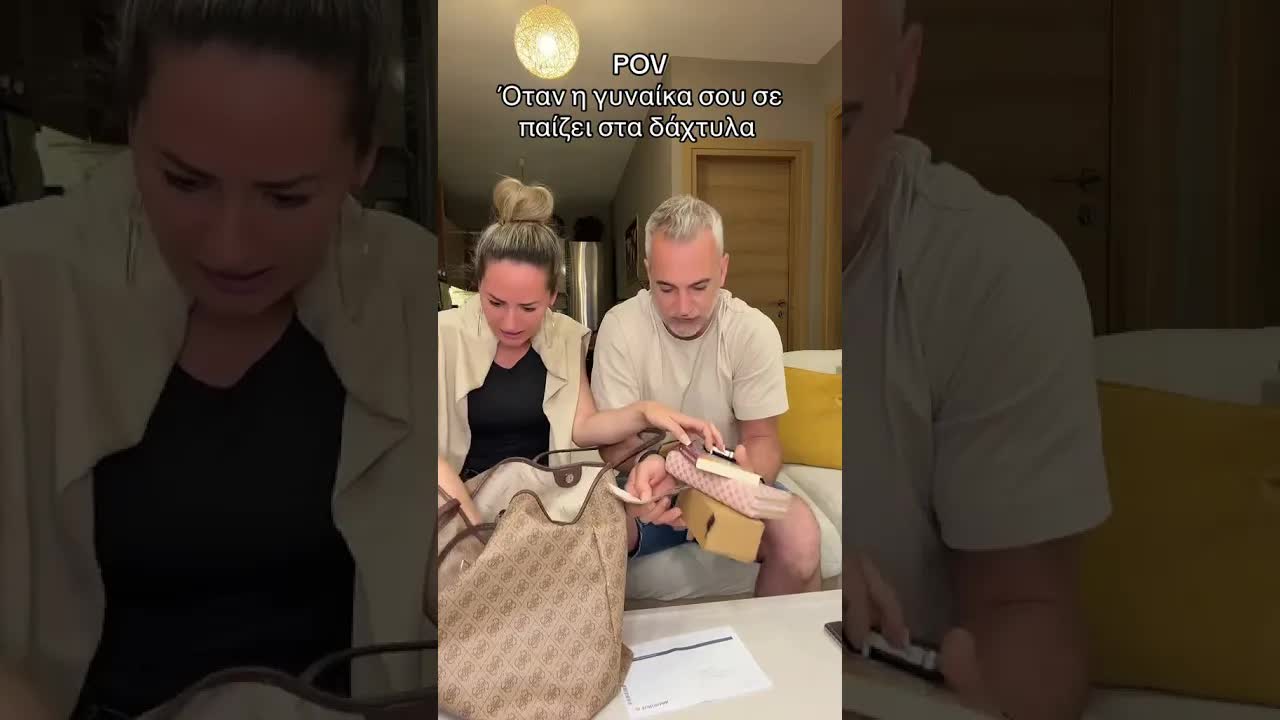


מאת Npress Media ב-YouTube. צפייה במקור
Greek μωρέ comes from μωρός, “stupid”, yet today it is a friendly filler that softens a question.
Μωρέ looks like an insult, because it began as the vocative of μωρός, “stupid” (Ancient Greek ὦ μῶρε, “oh, you fool”). Over the centuries it wore down into an interjection. Today it is a small filler that adds warmth, impatience or affectionate teasing to a sentence, and it can be said to anyone, even a baby or a husband.
In the clip, a woman rummages through a bag while someone holds it, and says “Τι να βρεις εκεί μέσα, μωρέ;” (“What are you going to find in there, anyway?”). The μωρέ makes the question sound like exasperated affection, not an attack. Earlier she says “Έλα μωρέ”, where it works the same way. You will hear it at the end of a clause, after a name or after “έλα”. Dictionaries trace it back to Ancient Greek, and related forms like βρε and μπρε are shortened versions.
עד כמה נפוצות המילים בסרטון הזה?
89.9%
מהמילים נמצאות בין 2,000 המילים הנפוצות ביותר ביוונית
מתוך המחקר שלנוכמה מילים צריך כדי להבין סרטונים של דוברים ילידיים?
עוד סרטונים כמו זה
Η πρώτη μέρα στο σχολείο μου!

Φτιάχνω έναν χιονάνθρωπο και συστήνω τον Όλαφ
Αγάπη μου, εγώ δεν θα φάω!

Σε ποιους στέλνεις φιλιά;

Η Ανδριάνα πάει στον οφθαλμίατρο για έλεγχο

Περιγραφή φωτογραφιών με ρούχα, χρώματα και ποδήλατα
למידה מסרטונים אמיתיים
אלפי סרטונים כמו זה, מותאמים לרמה שלך תוך כדי צפייה.